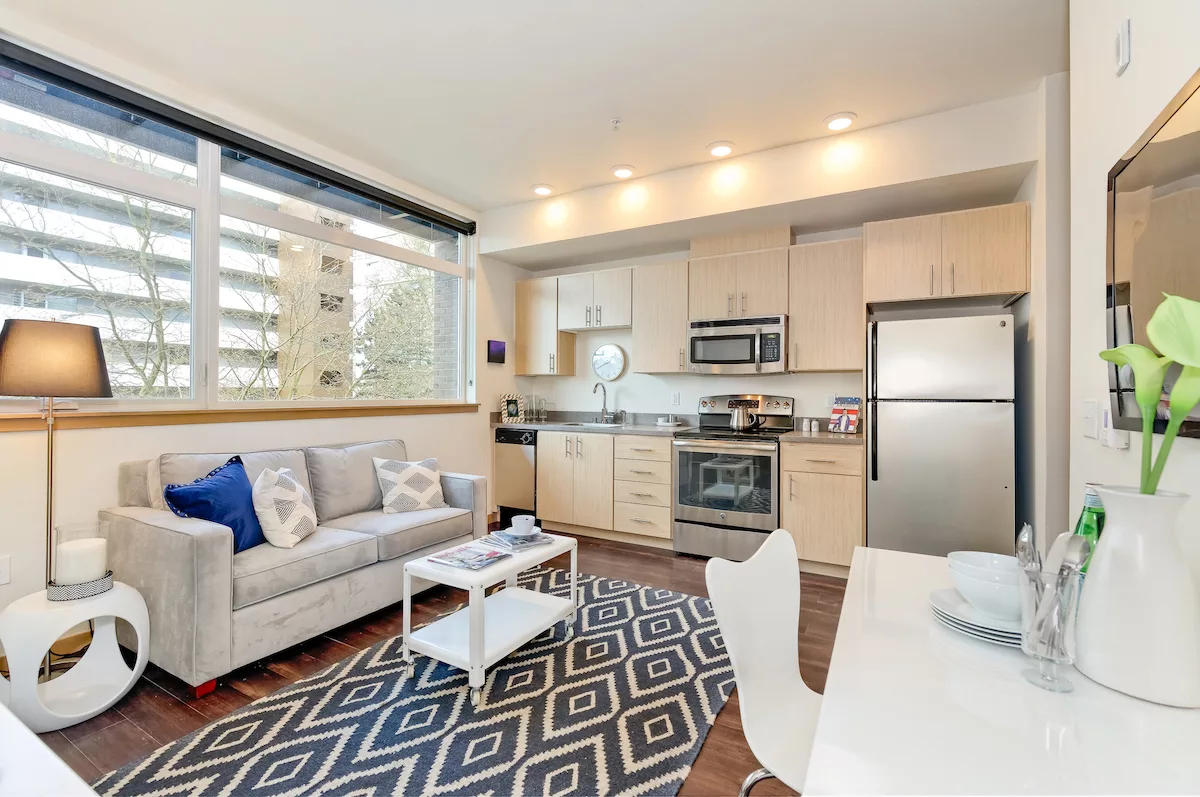
TL;DR: Seattle MFTE income limits are set each year by the city and tied to Area Median Income, with eligibility depending on household size and the specific rent tier of the unit. At The Perch Capitol Hill, a LEED Gold, carbon neutral building on Belmont Ave E in Capitol Hill, a limited number of MFTE income-restricted homes are available with up to two weeks free, and eligibility is reviewed through Pronto Housing.
- Understand how Seattle sets MFTE income limits using Area Median Income and household size before you start looking at units.
- Compare your household income to the current limits early so you know which floor plans at The Perch Capitol Hill fit your budget.
- Capture the current MFTE special of up to two weeks free by applying to an income-restricted home while availability lasts.
- Prepare income documentation ahead of time since MFTE homes require an eligibility review and annual recertification.
- Schedule a tour of The Perch Capitol Hill to see the studios, one-bedrooms, and loft homes before committing to an application.
What MFTE Means for Renters at The Perch Capitol Hill
MFTE stands for Multifamily Tax Exemption, a Seattle program that gives property owners a property tax break in exchange for renting a portion of their homes at reduced rates to income-qualifying households. The Perch Capitol Hill, a LEED Gold certified, carbon neutral building at 500 Belmont Ave E, participates in both the MFTE program and Seattle’s Incentive Zoning program, which is how a limited number of its studio, one-bedroom, and loft homes become available at income-restricted rents.
Is MFTE Low Income Housing?
MFTE is not the same as traditional low income public housing. It is a market-rate building, like The Perch Capitol Hill, that sets aside a portion of its homes for renters whose income falls within a defined range tied to Area Median Income. Unlike public housing programs that primarily serve very low income households, MFTE is designed for a broader range of working renters, including people earning a moderate income who still find market-rate Capitol Hill rents out of reach. That distinction matters because it shapes who the program is built for. A renter working a steady job in Seattle, earning a moderate salary, may qualify for an MFTE home at The Perch Capitol Hill even if they would not qualify for lower income housing programs elsewhere in the city.
- Market-rate building. The Perch Capitol Hill is a privately managed, LEED Gold building, not subsidized public housing.
- Income range, not income floor. MFTE serves renters within a set income band, not only the lowest earners.
- Separate application. MFTE homes are applied for online through Pronto Housing, distinct from the standard leasing process.
Why This Building Participates
The Perch Capitol Hill was built with sustainability and long-term community value in mind, from its passive cooling design to its reverse cycle air-to-water chiller that transfers heat from the parking garage to the hot water supply. Participating in MFTE and Incentive Zoning fits that same approach: it keeps a share of homes in one of Seattle’s most walkable neighborhoods accessible to a wider range of income levels, without changing the quality of the building itself. Every resident, whether in an MFTE home or a market-rate home, has access to the same rooftop lounge, the same energy efficient windows, and the same controlled building access. The distinction is in the rent and the eligibility review, not in the experience of living there.
MFTE income limits are not a flat number. They shift with household size, with the AMI percentage tied to your specific unit, and with the year.
How Seattle Sets MFTE Income Limits
Seattle sets MFTE income limits every year based on Area Median Income for the Seattle metro area, adjusted for household size and the specific AMI percentage tier assigned to each unit. These limits are published by the Seattle Office of Housing and updated annually, so the number that applied last year is not the number that applies now.
What Is the AMI Limit for Seattle in 2026?
Area Median Income for the Seattle area is calculated annually using data from the U.S. Department of Housing and Urban Development, then adjusted for the local metro area and household size. MFTE units are typically restricted to somewhere between 60 and 80 percent of AMI, though the exact percentage depends on the specific unit and program tier. Because these figures change every year and vary by household size, the most reliable way to see the exact current dollar limits is to check the Seattle Office of Housing’s published income and rent limits directly, or to ask during the eligibility review for a specific home at The Perch Capitol Hill. Rather than relying on a number that may be outdated by the time you read it, treat the percentage of AMI as the framework and confirm the current dollar figure at the time you apply.
- AMI is recalculated yearly. Figures shift with regional income data, so always confirm the current year’s numbers.
- Household size matters. A one-person household and a three-person household have different limits under the same AMI percentage.
- Unit-specific tiers. Some homes are restricted at 60 percent AMI, others at a higher percentage, which changes the qualifying range.
How Household Size Changes the Math
MFTE income limits are not one flat number for the whole city. They scale with household size, meaning a single applicant and a household of three are measured against different thresholds even for the same unit. This is one of the most misunderstood parts of the program, and it is why two people looking at the same floor plan might get different answers about whether they qualify. When you start the process for a home at The Perch Capitol Hill, the eligibility review will ask how many people will actually live in the unit. That number, combined with the AMI percentage tied to that specific home, determines the income range you need to fall within.
Seattle MFTE Income Limits Calculator and Where to Verify Numbers
Several tools and resources exist to help renters estimate whether they might qualify, often referred to informally as a Seattle MFTE income limits calculator or an AMI calculator. These tools can give a useful starting estimate, but the authoritative source is always the Seattle Office of Housing’s published limits, updated for the current year. Because these figures are precise and change annually, this article will not restate specific dollar amounts that could be outdated by the time you read it. Instead, use the Office of Housing’s current tables or ask the leasing team directly when you inquire about a specific MFTE home at The Perch Capitol Hill.
- Check the source directly. The Seattle Office of Housing publishes current MFTE income and rent limits each year.
- Use estimator tools as a starting point only. Treat any AMI calculator as a rough guide, not a final answer.
- Ask during application. The Pronto Housing application process will confirm your exact eligibility against current limits.

| Factor | How It’s Determined | Where to Check It |
|---|---|---|
| Area Median Income (AMI) | Set annually by HUD and adjusted for the Seattle metro area | Seattle.gov Office of Housing |
| Household size | Counts everyone who will live in the unit, not just the applicant | Confirmed during the Pronto Housing application |
| AMI percentage tier | Each MFTE unit is assigned a percentage, commonly in the 60 to 80 percent AMI range | Listed on the specific unit’s MFTE terms |
| Income documentation | Pay stubs, tax returns, or offer letters verifying gross annual income | Requested during eligibility review and at annual recertification |
Common Questions About Qualifying
Most renters researching Seattle MFTE income limits want to know two things: whether their income falls in the right range, and whether that range feels attainable for someone with a typical Seattle salary. Both questions have straightforward answers once you understand how AMI percentages work.
What Is the Maximum You Can Make to Qualify for Low Income Housing?
There is no single maximum income figure that applies citywide, because MFTE limits vary by household size and by the AMI percentage assigned to each unit. A studio restricted at 60 percent AMI will have a lower income ceiling than a one-bedroom restricted at 80 percent AMI, and both numbers change annually. Renters should also keep in mind that MFTE differs from other affordable housing programs that may have their own separate limits, such as Low Income Public Housing. MFTE specifically applies to designated units in participating buildings like The Perch Capitol Hill, so the limits that matter are the ones tied to that program and that specific unit.
What Is Considered Low Income in Seattle for a Single Person
For a single person, what counts as low income in Seattle is defined relative to Area Median Income for a one-person household, which is a different figure than the AMI for a family of four. This is a common point of confusion in searches about Seattle AMI calculators and income limits, since many people compare their income to a household size that does not match their own. If you are a single applicant considering a studio at The Perch Capitol Hill, your income will be measured against the one-person household AMI threshold for whichever percentage tier that specific studio is restricted at, not against a general citywide figure.
- Household size specific. One-person AMI thresholds differ from two, three, and four-person thresholds.
- Tier specific. The percentage of AMI assigned to a unit, not just your income, determines what counts as qualifying.
- Updated annually. What counted as low income last year may not match this year’s published limits.
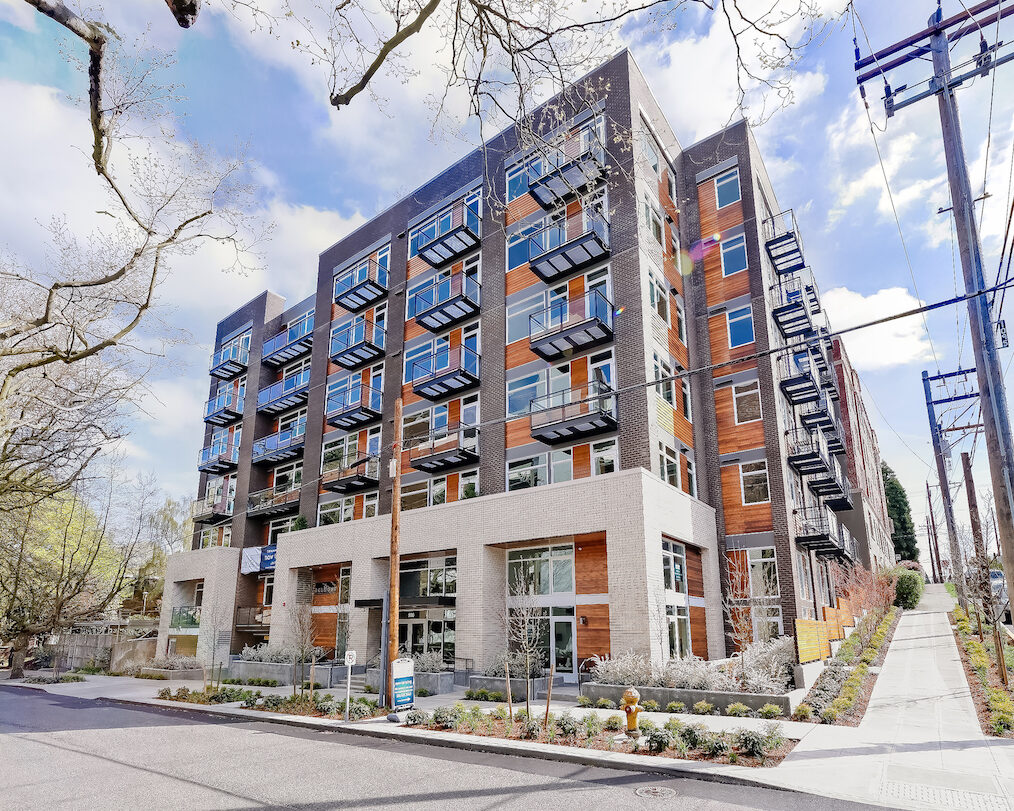
MFTE Homes at The Perch Capitol Hill
A limited number of MFTE income-restricted homes are available at The Perch Capitol Hill, spanning the same range of studio, one-bedroom, one-bedroom-plus-den, and two-level loft layouts found throughout the building. These homes carry the same rooftop lounge access, exterior decks, and energy efficient design as every other home in the building, with rent tied to income eligibility instead of the market rate.
The Homes Available Under MFTE
The Perch Capitol Hill offers homes ranging from 436 to 1,071 square feet across seven studio layouts, five one-bedroom and den configurations, three one-bedroom loft styles, and a single two-bedroom loft. MFTE availability rotates among these floor plans, so the specific units offered at income-restricted rents change over time based on what becomes available. Because the building has only one 2 Bed 2 Bath loft home in the entire building, at 1,071 square feet, and because loft homes generally go fastest, renters interested in a loft under MFTE terms should not wait to inquire. The interactive SightMap on the availability page shows current openings, filterable by floor, price, move-in date, and bedroom count, which is the fastest way to see what is open right now.
- Studios from 436 to 497 square feet, across seven distinct layouts.
- One-bedroom and one-bedroom-plus-den homes from 599 to 731 square feet.
- Two-level loft homes, including one-bedroom lofts from 646 to 750 square feet and the building’s single 1,071 square foot two-bedroom loft.
- Availability shown live on the availability page, filterable by floor, price, and move-in date.
The Current MFTE Special
Renters who qualify for and secure an MFTE home at The Perch Capitol Hill can currently take advantage of up to two weeks free. This offer applies specifically to MFTE units, not to the building’s market-rate homes, so it is worth factoring into your timeline if you are actively comparing income-restricted options in Capitol Hill. Because MFTE availability is limited and tied to what units are currently designated under the program, this special is most useful to renters who are already prepared with income documentation and ready to move through the eligibility review promptly.
What Every Resident Gets, MFTE or Market Rate
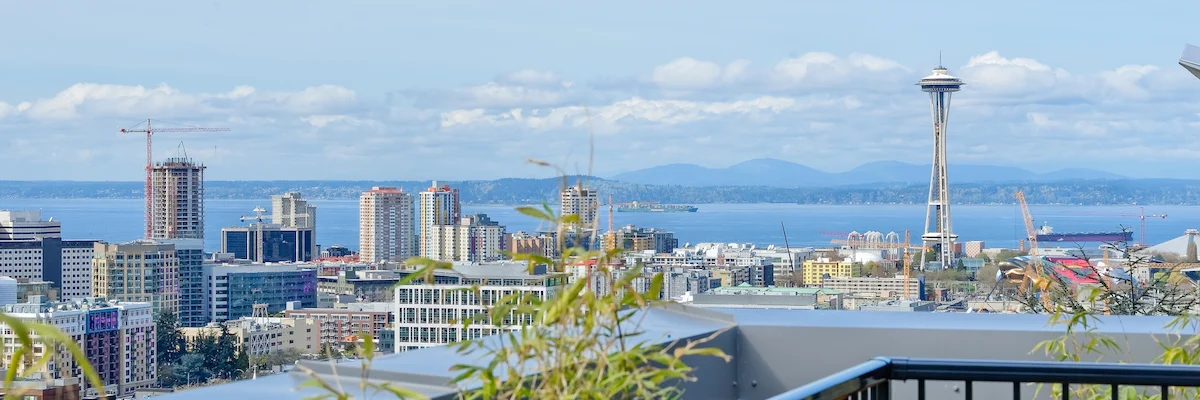
Whether a home is income-restricted or market rate, every resident at The Perch Capitol Hill has access to the same building-wide amenities. That includes the rooftop lounge with BBQ grills, city views, and an Olympic Mountains backdrop, controlled access parking and bike storage, Parcel Pending package lockers, and in-home washer and dryer units. The building’s sustainability features, including passive cooling design that eliminates the need for window AC units and floor-to-ceiling energy efficient windows that reduce street noise, are consistent across every floor plan. This building was recognized as Green Builder Media’s Home of the Year in 2014 and remains LEED Gold certified with a carbon neutral footprint at construction, a distinction that applies to the whole property, not a subset of homes.
- Rooftop lounge with BBQ grills and Olympic Mountains views, open to all residents.
- Passive cooling design, meaning no window AC units are needed even on warm Seattle days.
- In-home washer and dryer, quartz countertops, and modern wood-look flooring throughout.
- Controlled access parking and bike storage, with parking available at 250 dollars per month.
How to Apply Through Pronto Housing
MFTE homes at The Perch Capitol Hill are applied for online through Pronto Housing, a process separate from the standard leasing application, and it involves an eligibility review, income documentation, and annual recertification once you’re a resident. Understanding these steps upfront makes the process faster once a unit becomes available.
What the Eligibility Review Involves
The eligibility review for an MFTE home checks your household size and gross annual income against the current AMI-based limits for that specific unit’s percentage tier. You’ll need to provide income documentation, which typically includes recent pay stubs, tax returns, or an offer letter if you’re starting a new job. Once approved and moved in, MFTE residents go through annual recertification to confirm continued eligibility. This is a standard part of the program citywide, not unique to The Perch Capitol Hill, and it exists to keep the income-restricted homes serving the renters the program is designed for.
- Income documentation. Pay stubs, tax returns, or an offer letter verifying gross annual income.
- Household size confirmation. Everyone living in the unit counts toward the household size calculation.
- Annual recertification. Required each year to confirm continued eligibility under current limits.
Standard Move-In Costs to Plan For
Beyond the income eligibility review, MFTE applicants at The Perch Capitol Hill should plan for the same general move-in costs that apply building-wide, details covered more fully on the move in costs and fees page. These include a 55 dollar application fee, a refundable 600 dollar security deposit, and a hold fee that applies toward first month’s rent, which ranges from 250 to 400 dollars depending on the rent amount. Renters bringing a pet should also budget for a 300 dollar refundable pet deposit and 50 dollars per pet in monthly pet rent, since The Perch Capitol Hill is pet-friendly across both market-rate and MFTE homes. All residents are responsible for their own utilities and are required to carry renter’s insurance.
- 55 dollar application fee, standard across the building.
- 600 dollar refundable security deposit.
- Hold fee of 250 to 400 dollars, applied toward first month’s rent depending on the rent tier.
- 300 dollar refundable pet deposit plus 50 dollars per pet monthly, for pet-friendly homes.
Ready to See What’s Available
Once you have a sense of your household size and income relative to current MFTE limits, the next step is seeing what’s actually open. Availability changes as MFTE homes turn over, so checking in regularly or reaching out directly gives you the best shot at the floor plan you want, especially for the building’s limited loft homes. You can schedule a tour to walk through a studio, one-bedroom, or loft in person and ask specific questions about current MFTE openings.
Life on Belmont Ave E Once You’re In
Living at The Perch Capitol Hill means stepping out onto Belmont Ave E into one of Seattle’s most walkable pockets, with a Walk Score of 96 and the Capitol Hill light rail station within easy reach. Whether you’re in a market-rate home or an MFTE unit, the daily experience of the neighborhood is the same.
Coffee, Food, and Errands Within a few blocks
A few blocks from Belmont Ave E puts you at Analog Coffee on Summit Ave E or hearth and coffee on Broadway E for a morning routine that doesn’t require a car. Dinner options are just as close, from Harry’s Fine Foods on Bellevue Ave E to Capitale Pizzeria and Falafelville on E Olive Way. Broadway Market and Kobo Shop and Gallery cover everyday shopping and browsing, while Twice Sold Tales on Harvard Ave offers the kind of neighborhood stop that makes errands feel less like errands. None of this requires driving, which matters when you’re already saving on a parking spot or skipping a car altogether.
- Coffee within a few blocks at Analog Coffee, Espresso Vivace, and hearth and coffee.
- Dining options including Single Shot, Altura, and Deluxe Bar and Grill, all within blocks.
- Everyday shopping at Broadway Market and Kobo Shop and Gallery.
Parks and Outdoor Space Nearby
Cal Anderson Park is one of the closest green spaces, offering open lawn and paths within easy a few blocks of Belmont Ave E. Summit Slope Park and Tashkent Park provide smaller, quieter pockets closer to the building, while Volunteer Park offers a longer walk for those who want more space and views. Back at the building, the rooftop lounge extends that outdoor time closer to home, with BBQ grills and a backdrop that includes the Olympic Mountains. Combined with exterior decks on most homes, residents have more than one way to get fresh air without leaving the property.
Getting Around Without a Car
The Capitol Hill light rail station puts downtown Seattle, the University of Washington, and the airport within direct reach, while RapidRide extends bus access further across the city. Cycle share and ZipCar options nearby round out the transportation picture for residents who want flexibility without owning a car. For those who do drive, The Perch Capitol Hill offers controlled access parking at 250 dollars per month, along with controlled access bike storage for those who bike locally or connect to transit by bike.
- Capitol Hill light rail station within a few blocks for downtown and citywide connections.
- RapidRide bus access for additional coverage across Seattle.
- Cycle share and ZipCar options nearby for car-free or car-light living.
- Controlled access parking on-site at 250 dollars per month for residents who drive.
Frequently Asked Questions
Is MFTE low income housing?
MFTE is not traditional low income public housing. It is a Seattle program that sets aside homes in market-rate buildings, like The Perch Capitol Hill, for renters whose income falls within a defined range tied to Area Median Income, which can include moderate income working households, not only the lowest earners.
What is the AMI limit for Seattle in 2026?
Seattle’s Area Median Income limits are recalculated annually by the Office of Housing based on federal HUD data, adjusted for household size and the specific AMI percentage tier of a unit. Because these figures update every year, renters should check the Office of Housing’s current published limits or ask directly about a specific MFTE home rather than rely on last year’s numbers.
Is $120,000 a good salary in Seattle?
A $120,000 salary supports a comfortable standard of living in Seattle, but whether it fits within MFTE income limits depends on household size and the AMI percentage assigned to a specific unit. The same income might qualify for some MFTE tiers and exceed the limit for others, so checking against current published limits for your household size is the only reliable way to know.
What is the maximum you can make to qualify for low income housing?
There is no single maximum income for MFTE citywide, because limits vary by household size and by the AMI percentage tier assigned to each unit. A studio restricted at a lower AMI percentage will have a different income ceiling than a one-bedroom restricted at a higher percentage.
How do I know if I qualify for an MFTE home at The Perch Capitol Hill?
Eligibility is confirmed during an income eligibility review, which compares your household size and gross annual income against the current AMI-based limits for the specific unit’s percentage tier. Applications and this review are handled online through Pronto Housing.
What documents do I need for the MFTE application?
You’ll typically need recent pay stubs, tax returns, or an offer letter to verify your gross annual income, along with confirmation of everyone who will live in the household. Annual recertification is required after move-in to confirm continued eligibility.
Are MFTE homes different from market-rate homes at The Perch Capitol Hill?
MFTE homes carry the same floor plans, finishes, and access to building amenities as market-rate homes, including the rooftop lounge, controlled access parking, and in-home washer and dryer. The difference is in the rent, which is set by income eligibility rather than the standard market rate, and in the separate application process through Pronto Housing.
Is there a move-in special for MFTE homes right now?
Yes, MFTE units at The Perch Capitol Hill currently offer up to two weeks free. This special applies specifically to MFTE units, not to market-rate homes in the building.
What is considered low income in Seattle for a single person?
For a single person, low income thresholds are based on Area Median Income calculated specifically for a one-person household, which differs from thresholds for larger households. The exact figure depends on the AMI percentage tier of the specific unit being considered.
Start With Your Household Size, Then Reach Out
Seattle MFTE income limits come down to a few moving parts: your household size, the current Area Median Income figures published annually by the city, and the specific AMI percentage tier assigned to a unit. Rather than guessing based on last year’s numbers or a generic online calculator, the most reliable path is checking the current published limits and confirming your specific eligibility during the application process. At The Perch Capitol Hill, a LEED Gold certified, carbon neutral building at 500 Belmont Ave E in Capitol Hill, a limited number of MFTE income-restricted homes are available across studios, one-bedrooms, and loft layouts, with up to two weeks free currently offered on those units. If you think you might qualify, the next step is simple: explore current availability, gather your income documentation, and reach out. You can Register Now through Pronto Housing to start the MFTE application, or Schedule A Tour to see the homes, the rooftop lounge, and the Belmont Ave E block in person before you decide. For questions, call leasing at 206-489-2747 or email Leasing@pacificcrestre.com.