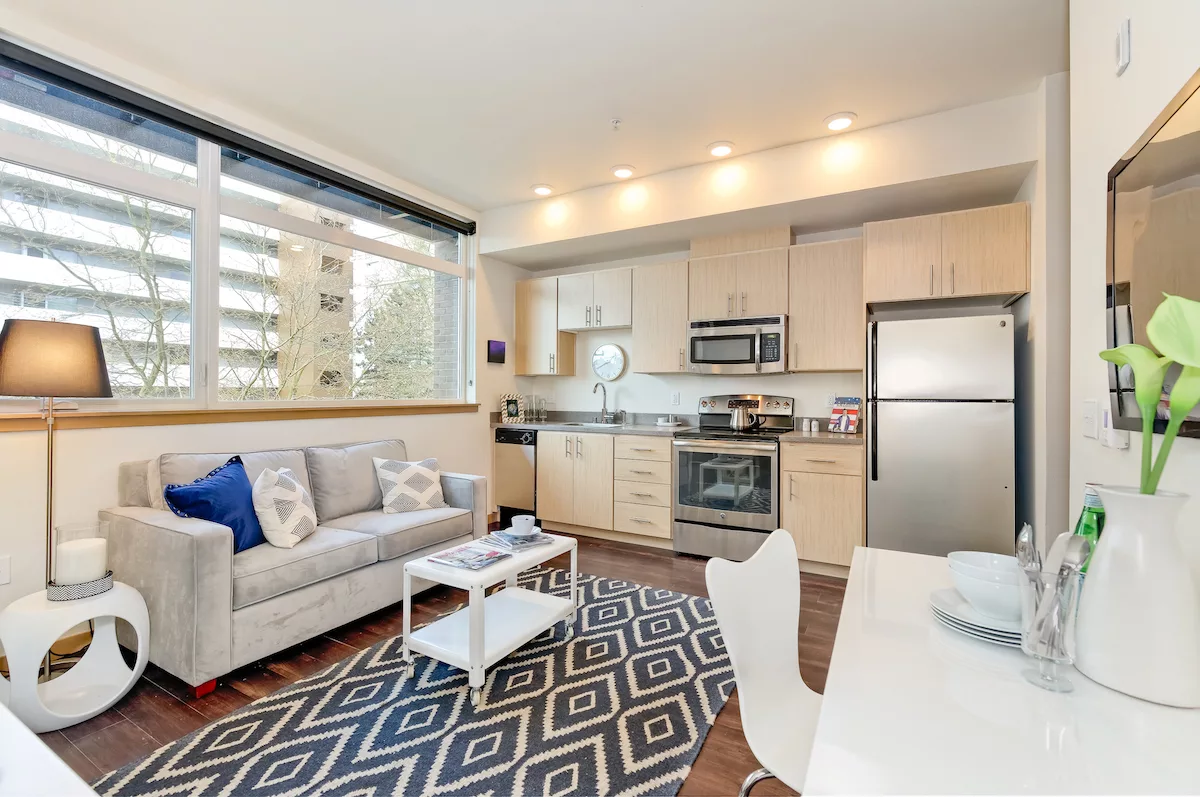
TL;DR: The median rent in Seattle is $2,088 a month in Apartment List’s October 2026 report, down 2.8% from a year earlier. Other trackers put the city between $1,980 and $2,251 depending on what they measure. Capitol Hill averages a little less than the city overall because its apartments are smaller, but its one-bedrooms cost about the same and its two-bedrooms cost more.
Key takeaways
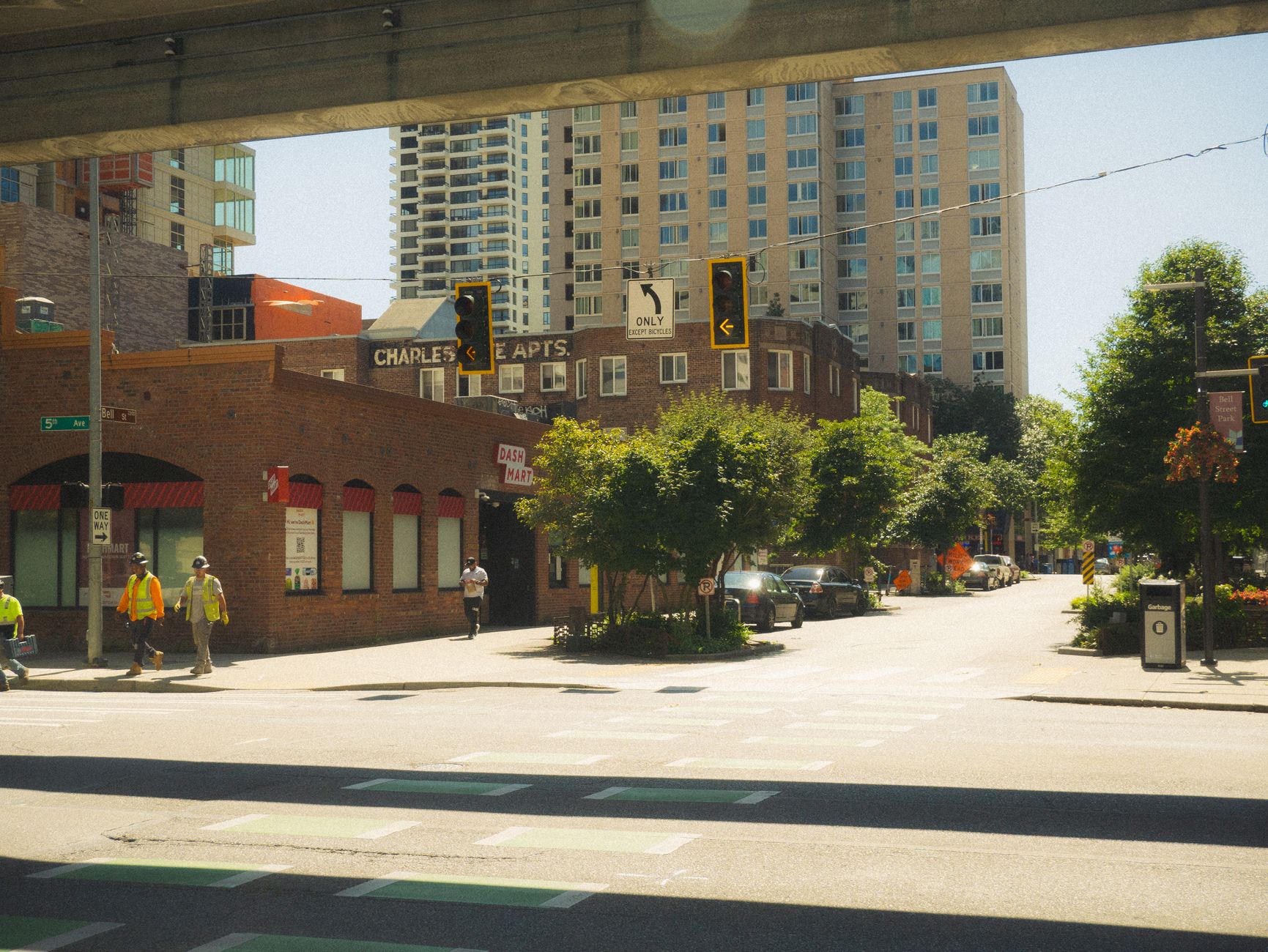
- Use one source when you compare: medians, averages and indexes differ by about 270 dollars a month for the same city.
- Compare by bedroom count, not overall averages, because Capitol Hill units run about 80 square feet smaller.
- Expect a flat market: most trackers show Seattle rents flat to slightly down year over year.
- Know the 2026 rules: Washington caps most renewals at 9.683% this year, and Seattle caps deposits plus move-in fees at one month’s rent.
- Check current pricing on the availability page, then schedule a tour.
The Median Rent in Seattle in Fall 2026
Apartment List puts the median rent in Seattle at $2,088 in its October 2026 report, roughly unchanged from the month before. One-bedrooms have a median of $1,948 and two-bedrooms $2,432. Prices are down 2.8% from a year earlier.
That is one reading. Each major tracker measures something slightly different, so the “Seattle rent” you see in a headline depends on who published it.
| Source | What it measures | Seattle | Period |
|---|---|---|---|
| Zumper | Median of current listings | $1,980 | Oct 2026 |
| US Census ACS | Median gross rent, all renters, utilities included | $2,007 | 2024 |
| Apartment List | Median rent | $2,088 | Oct 2026 report |
| Zillow ZORI | Typical asking rent, all rentals | $2,227 | Sep 2026 |
| RentCafe | Average rent, large buildings | $2,251 | Oct 2026 |
Year over year, the direction is flat. Apartment List shows a 2.8% drop, RentCafe 1%, Zumper 0.8%, while Zillow’s index is up 0.5%. Regionally, Kidder Mathews reports Puget Sound apartment vacancy at 6.6% in the third quarter of 2026, down from 7.0% a year earlier.
Capitol Hill vs the City, Bedroom by Bedroom
Capitol Hill rent looks cheaper than the Seattle average at first glance and more expensive once you adjust for size. RentCafe’s October 2026 data shows why.
- All apartments. Capitol Hill averages $2,087 for 616 square feet. Seattle averages $2,251 for 696 square feet.
- Studios. $1,565 on Capitol Hill vs $1,621 citywide.
- One-bedrooms. $2,233 on Capitol Hill vs $2,211 citywide, almost even.
- Two-bedrooms. $3,156 on Capitol Hill vs $2,873 citywide.
Per square foot, the Hill costs more
Zumper files central Capitol Hill under the city’s official neighborhood name, Broadway. Its October 2026 median there is $1,779, below the citywide $1,980. Per square foot, though, Broadway listings average $3.05 against $2.64 for Seattle as a whole.
Census tract data tells a similar story. Across the nine tracts the City of Seattle uses for Capitol Hill, the 2020 to 2024 median gross rent ranges from $1,772 to $2,299, against $2,030 for the city.
On Capitol Hill you pay a little less per month and a little more per square foot.
Why Every Rent Number Is Different
The spread between $1,980 and $2,251 is not an error. It comes from three choices each source makes.
Median, average or index
A median is the middle rent. An average is pulled up by expensive units. Zillow’s index is a smoothed “typical” rent built from repeat listings, so it is neither.
Asking rent or rent actually paid
Listing sites track asking rents for homes on the market now. The Census Bureau surveys what all renters pay, including long-time tenants, and adds utilities to get “gross rent.” Its 2025 figures are scheduled for release on October 29, 2026.
Which buildings count
RentCafe draws on Yardi Matrix data for large, professionally managed buildings, which skews newer. Zumper counts every listing type on its site, including houses and rooms.
The federal benchmark
HUD’s Fair Market Rents for fiscal 2027, in effect since October 1, 2026, are $2,091 for a studio, $2,180 for a one-bedroom and $2,549 for a two-bedroom in the Seattle-Bellevue area. They are set at the 40th percentile of rents for recent movers and include utilities.
What Capitol Hill Rent Pays For
Capitol Hill rent buys location more than square footage. The City of Seattle’s 2026 profile of the neighborhood shows how residents use it.
- A renter’s neighborhood. 87% of Capitol Hill households rent, compared with 56% citywide.
- Fewer cars. 41% of households have no vehicle, more than double Seattle’s 19%.
- Housing costs bite here too. 44% of renters spend 30% or more of income on housing, near the city’s 42%.
The no-car number connects to Link light rail. Capitol Hill Station puts downtown three minutes away, and the 2 Line now runs to Bellevue. A household that skips a car payment, insurance and parking can come out ahead even when the rent is higher per square foot.
Rules That Shape What You Pay in Seattle
Two sets of rules matter as much as the market rate when you budget.
Washington’s rent increase cap
State law limits most rent increases to 7% plus inflation, or 10%, whichever is lower, in any 12 month period. The Department of Commerce set the 2026 cap at 9.683% and the 2027 cap at 10%. Rent cannot rise in the first 12 months of a tenancy. Buildings whose first certificate of occupancy is 12 years old or newer are exempt, among others.
Seattle’s move-in cost limits
- One month total. The security deposit and move-in fees combined cannot exceed one month’s rent.
- Fees capped at 10%. Nonrefundable move-in fees, for screening or cleaning, cannot exceed 10% of the first month’s rent.
- Installments. On a lease of six months or more, renters can pay the deposit, fees and last month’s rent in six equal monthly payments.
Income-restricted MFTE homes follow separate rules. The 2026 limit for one person at 65% of area median income is $74,815. The Seattle MFTE income limits guide and the MFTE page explain how it works, and the move-in costs page lists what to budget up front.
Frequently Asked Questions
What is the median rent in Seattle in 2026?
Apartment List’s October 2026 report puts the citywide median at $2,088, with one-bedrooms at $1,948 and two-bedrooms at $2,432. Zumper’s October median is $1,980, and the Census Bureau’s latest figure, for 2024, is $2,007 including utilities. Most sources show rents flat or slightly down from 2025.
Is Capitol Hill more expensive than the rest of Seattle?
Per square foot, yes. Per month, it depends on the unit. RentCafe’s October 2026 data shows Capitol Hill averaging $2,087 against $2,251 citywide, mainly because units are smaller. One-bedrooms are about even with the city, and two-bedrooms average $3,156 on the Hill vs $2,873 citywide.
How much can my rent go up in Washington in 2026?
For most tenancies, the state cap is 9.683% in any 12 month period during 2026, and it rises to 10% for 2027. Rent cannot be raised in the first 12 months of a tenancy. Some homes are exempt, including buildings whose first certificate of occupancy was issued 12 or fewer years before the increase notice.
How much can a Seattle landlord charge at move-in?
In Seattle, the security deposit and move-in fees together cannot exceed one month’s rent. Nonrefundable fees for screening or cleaning are limited to 10% of the first month’s rent, and a pet deposit can add up to 25%. On leases of six months or longer, renters can spread these costs over six monthly payments.
Why do Seattle rent reports disagree?
They measure different things. Some report medians and some averages, some track asking rents on current listings while the Census Bureau surveys what all tenants pay including utilities, and some only include large buildings. For a fair comparison between neighborhoods, use one source, compare the same bedroom count, and look at price per square foot.
Use the Market Numbers, Then Check the Real Listing
The median rent in Seattle sits a little above 2,000 dollars this fall, and Capitol Hill trades smaller units and a higher price per square foot for walkability and light rail. Market figures are a starting point, not a quote. At The Perch, current studio, one-bedroom and loft pricing is posted on the availability page, and the leasing team can walk you through move-in costs and MFTE eligibility. Schedule A Tour to compare the space against the numbers.