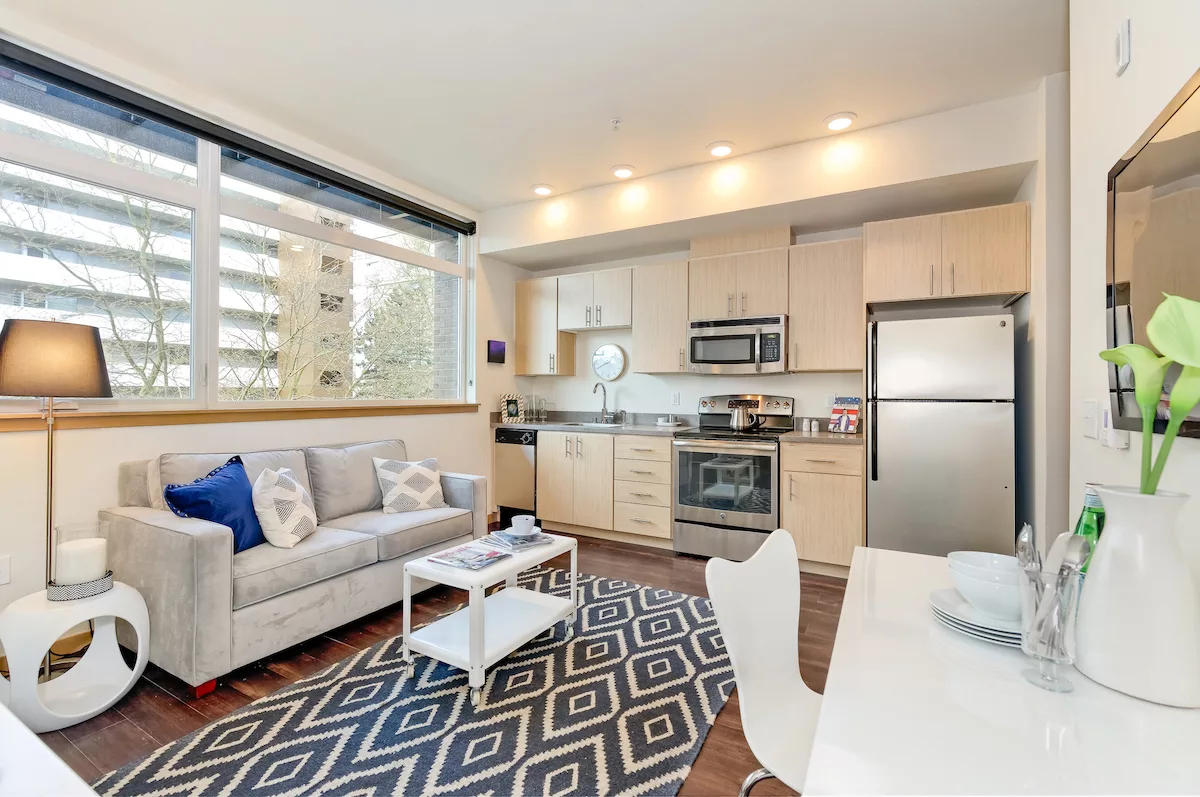
TL;DR: Living in Capitol Hill Seattle without a car is realistic because the neighborhood carries a Walk Score of 96, sits on top of the Capitol Hill Link light rail station, and puts Pike/Pine restaurants, grocery stores, and parks within a few blocks. The Perch Capitol Hill, a boutique building at 500 Belmont Ave E, is built for exactly this lifestyle, with controlled access bike storage, easy access to cycle share and ZipCar, and studios through two-level lofts all within a few blocks of the station.
- Cut your monthly transportation budget by relying on the Capitol Hill Link light rail station, RapidRide, cycle share, and ZipCar instead of car payments, gas, and parking.
- Choose a home a few blocks from daily needs, since Capitol Hill’s Walk Score of 96 puts groceries, coffee shops, and restaurants on Broadway and Pike/Pine within a few blocks.
- Skip the parking spot and the monthly parking fee entirely if you do not need a vehicle, or add controlled access parking at The Perch for 250 dollars a month if you still want one.
- Store a bike securely using controlled access bike storage instead of hauling it up stairs or leaving it exposed on a rack.
- Schedule a tour of The Perch Capitol Hill to see how a home at 500 Belmont Ave E puts car-free living within easy reach of transit, food, and parks.
Is Living in Capitol Hill Without a Car Actually Realistic
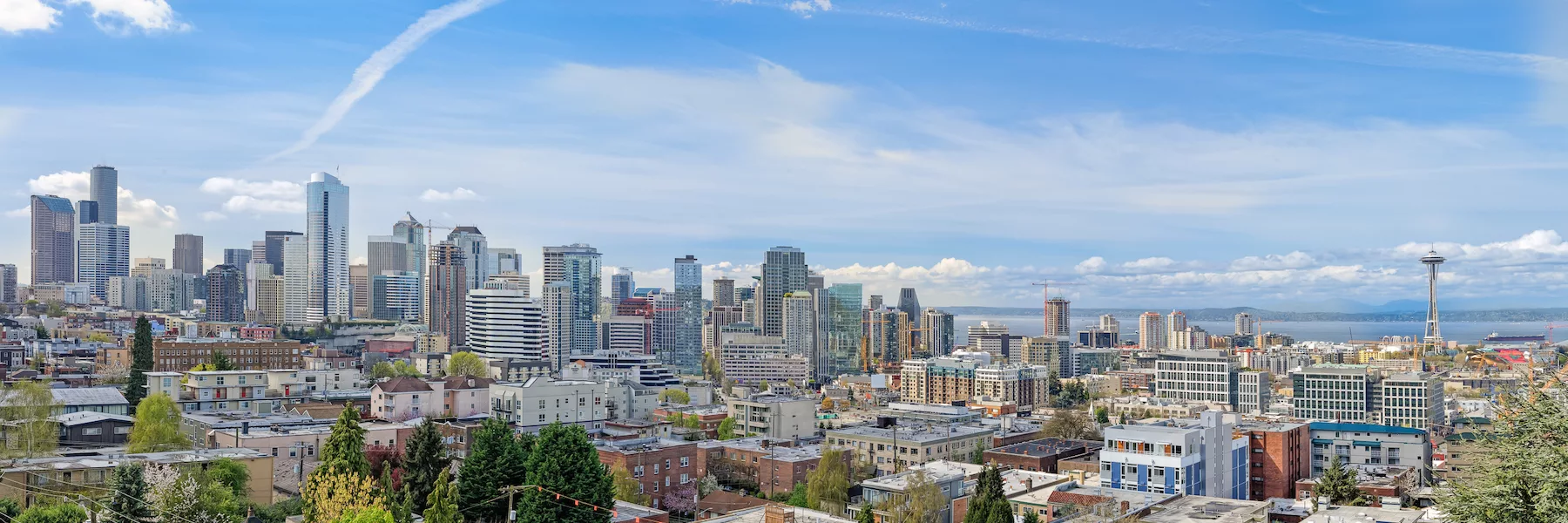
Yes, living in Capitol Hill Seattle without a car is realistic for most daily needs because the neighborhood combines a Walk Score of 96 with direct access to the Capitol Hill Link light rail station and RapidRide bus service. This is one of the few Seattle neighborhoods where groceries, restaurants, parks, and a train downtown are all within a ten to fifteen minute walk, which is exactly why it shows up again and again in conversations about car-free Seattle neighborhoods.
What Makes Capitol Hill Different From the Rest of Seattle
Seattle overall is not an especially car-free city. Much of it was built around single-family lots and hills that make walking to daily errands harder than it looks on a map. Capitol Hill breaks that pattern. It is dense, it is flat in the sections around Broadway and Pike/Pine, and it has had frequent transit for decades, well before the light rail extension arrived. The result is a neighborhood where you can genuinely structure your week without a vehicle. Errands, meals, coffee, and a commute downtown or to the University District are all reachable on foot, by bike, or by train. That is a different proposition than car-free living in a neighborhood where you technically can walk somewhere but rarely want to.
- Density. Capitol Hill packs housing, retail, and transit into a compact grid instead of spreading them across long arterial roads.
- Topology. The blocks around Broadway and Pike/Pine are relatively flat compared to hillier parts of the neighborhood, which makes walking and biking more practical day to day.
- History. Capitol Hill has had strong bus service for years, and the light rail station added a fast rail option on top of that existing network.
Who This Actually Works For
Car-free living on Capitol Hill works well for anyone whose daily routine centers on the neighborhood itself and downtown Seattle, since those are the trips the light rail and RapidRide cover best. It also works for people who occasionally need a car for a specific errand or weekend trip, since ZipCar and cycle share are both accessible in the neighborhood without requiring you to own or store a vehicle full time. The honest caveat: if your job or routine regularly pulls you to the Eastside, the far north end, or anywhere transit does not reach directly, you will be relying more on transfers, rideshare, or occasional car rentals. That is still workable, but it is a different rhythm than someone whose life mostly happens within a mile or two of Belmont Ave E.
On Capitol Hill, the light rail station is not a commute you plan around. It is just downstairs.
Getting Around Without a Car
Getting around Capitol Hill without a car means combining light rail, RapidRide buses, walking, biking, and car-share services depending on the trip. The Capitol Hill Link light rail station connects the neighborhood directly to downtown Seattle, the University District, and the airport corridor, while RapidRide and local buses fill in the routes light rail does not cover.
Light Rail and RapidRide
The Capitol Hill light rail station puts you a few blocks from a rail line that runs through downtown Seattle and up toward the University District, with connections further out toward the airport. For anyone commuting to a job downtown, in South Lake Union, or at the University of Washington, this single line handles a large share of the trip without a transfer. RapidRide adds frequent bus service along key corridors, which is useful for trips that light rail does not cover directly, like crossing east-west through the neighborhood or reaching parts of the city off the rail line. Together, light rail and RapidRide cover most of the trips that would otherwise require a car for a daily commute.
- Capitol Hill Link light rail station. A few blocks from most of the neighborhood, with direct service toward downtown and the University District.
- RapidRide. Frequent bus service that fills in routes light rail does not reach directly.
- Combined coverage. Between the two, most commute patterns into downtown or the University District do not require a car.
Cycle Share, ZipCar, and Biking
Cycle share and ZipCar give car-free residents an option for the trips that transit does not cover well, like a grocery run with heavy bags or a weekend trip out of the city. Neither requires owning or storing a vehicle, which is the whole appeal for someone who has decided not to keep a car full time. Biking is also genuinely useful on Capitol Hill for short trips within the neighborhood, especially given the relatively flat terrain around Broadway and Pike/Pine. The challenge for renters has always been storage: bikes left outside get weathered and sometimes stolen, and hauling a bike up several flights of stairs gets old fast. That is one of the more practical reasons secure bike storage matters as much as transit access when you are choosing a place to live car-free.
- Cycle share. Useful for short trips around the neighborhood without needing a personal bike.
- ZipCar. Available for occasional trips that are impractical by bus or train, without the cost of car ownership.
- Secure storage. A dedicated, controlled access space protects a bike from weather and theft better than an outdoor rack.
Walking as the Default
For a large share of daily needs, the simplest option on Capitol Hill is just walking. A Walk Score of 96 means most errands, meals, and social plans are reachable on foot without needing to plan around a bus schedule or train departure at all. This is the piece that makes car-free living here feel less like a sacrifice and more like the obvious choice. If you want to see exactly how walkable a specific home is before committing, it helps to look at the property’s floor plans and location relative to Broadway and Belmont Ave E, since a few blocks can change your daily walk in a noticeable way.
| Expense | Car-Free Resident | Car-Owning Resident |
|---|---|---|
| Parking | 0 dollars per month | 250 dollars per month for controlled access parking |
| Transit | ORCA card fare for light rail and RapidRide | Same, plus gas and maintenance |
| Bike storage | Included with controlled access bike storage | Optional, often unused |
| Car-share access | ZipCar and cycle share as needed, no ownership costs | Not needed, but available anyway |
| Insurance | Renter’s insurance only (required) | Renter’s insurance plus auto insurance |
Everyday Life Within a few blocks
Everyday life on Capitol Hill without a car means groceries, coffee, restaurants, bars, and parks are all reachable on foot from most homes in the neighborhood. This is the part of car-free living that matters most day to day, more than any single transit line, because it determines whether your errands feel easy or like a chore.
Food and Coffee Within a Few Blocks
Capitol Hill has a dense concentration of restaurants and coffee shops along Broadway, Pike/Pine, and the surrounding side streets. Options near Belmont Ave E and Summit Ave E include Harry’s Fine Foods on Bellevue Ave E, Single Shot on Summit Ave E, and Cafe Lolo on E Roy St, along with Altura, Deluxe Bar and Grill, Corvus and Company, Herb and Bitter Public House, Star Sushi and Bar, and Capitale Pizzeria, all on or near Broadway E. For something quick, Falafelville on E Olive Way and Paradise on Broadway E round out the walkable options. Coffee is just as close. Analog Coffee on Summit Ave E, Mintish Coffee House on Harvard Ave E, Espresso Vivace and hearth and coffee on Broadway E, Gearhouse Coffee Shop on E Thomas St, and Bean Espresso on Broadway E are all within a few blocks of most homes in the neighborhood. None of this requires a car. It requires a decent pair of shoes.
- Restaurants. Harry’s Fine Foods, Single Shot, Cafe Lolo, Altura, Deluxe Bar and Grill, Corvus and Company, Herb and Bitter Public House, Star Sushi and Bar, and Capitale Pizzeria.
- Quick bites. Falafelville on E Olive Way and Paradise on Broadway E.
- Coffee shops. Analog Coffee, Mintish Coffee House, Espresso Vivace, hearth and coffee, Gearhouse Coffee Shop, and Bean Espresso.
Shopping, Nightlife, and Parks
Shopping on Capitol Hill leans toward independent retail rather than big-box stores, which fits a walking lifestyle well. Broadway Market, Kobo Shop and Gallery, Pretty Parlor, Twice Sold Tales, and The New York Xchange are all reachable on foot and offer everything from groceries to books to vintage finds. Nightlife is equally close. Captain Blacks sits right on Belmont Ave E, and Sol Liquor Lounge, The Doctor’s Office, Hillside Bar, Revolver Bar, and Montana are all clustered nearby on Summit Ave E and E Olive Way. For green space, Cal Anderson Park, Tashkent Park, Summit Slope Park, Thomas Street Mini Park, Broadway Hill Park, and Volunteer Park give the neighborhood a genuine amount of outdoor room without needing to drive to a trailhead or regional park.
- Shopping. Broadway Market, Kobo Shop and Gallery, Pretty Parlor, Twice Sold Tales, and The New York Xchange.
- Nightlife. Captain Blacks on Belmont Ave E, plus Sol Liquor Lounge, The Doctor’s Office, Hillside Bar, Revolver Bar, and Montana nearby.
- Parks. Cal Anderson Park, Tashkent Park, Summit Slope Park, Thomas Street Mini Park, Broadway Hill Park, and Volunteer Park.

What Living Car-Free Actually Costs
Living car-free on Capitol Hill saves you the recurring costs of vehicle ownership, which include a monthly parking fee, auto insurance, gas, and maintenance, in exchange for transit fares and occasional car-share charges. This is the practical financial angle behind the popular question about the cost of living in Capitol Hill Seattle without a car, and it is worth breaking down concretely rather than in generalities.
What You Skip When You Go Car-Free
At The Perch Capitol Hill, controlled access parking costs 250 dollars a month for residents who want it. Skipping a car means skipping that cost entirely, along with gas, auto insurance, and maintenance that add up well beyond the parking fee itself. Renter’s insurance is still required in the building regardless of whether you own a car, but that is a much smaller expense than a full auto policy. For someone weighing move in costs and fees at a new apartment, cutting car ownership out of the monthly budget is often the single biggest lever available, bigger than negotiating rent or choosing a smaller floor plan.
- Parking. 250 dollars a month is skipped entirely if you do not need a spot.
- Auto insurance and maintenance. Both go away completely without a vehicle.
- Renter’s insurance. Still required in the building, but far less expensive than a full auto policy.
What You Still Pay For
Car-free does not mean cost-free. You will still pay ORCA fares for light rail and RapidRide, and occasional ZipCar or cycle share charges when you need a vehicle for a specific trip. These costs are variable and generally far lower than car ownership, but they are real and worth budgeting for, especially if your routine includes regular trips outside the neighborhood. It helps to think of it less as free and more as pay-per-use. You are not carrying a fixed monthly car payment, insurance premium, and parking fee whether you use the car that day or not. You are paying only when you actually need to move around.

Why The Perch Capitol Hill Fits Car-Free Living
The Perch Capitol Hill is built for car-free living because it sits at 500 Belmont Ave E, within easy reach of the Capitol Hill light rail station, and includes controlled access bike storage and easy access to cycle share and ZipCar for residents who want mobility without owning a vehicle. This is a boutique, six-floor building, not a sprawling complex, and every detail from its location to its amenities supports a lifestyle centered on walking and transit rather than driving.
Location and Layout Built Around Transit
The Perch sits on Belmont Ave E, one block east of Summit Ave E, between the Broadway and E Olive Way corridors. That puts it a few blocks from the Capitol Hill light rail station, the restaurants and coffee shops of Pike/Pine, and the parks scattered throughout the neighborhood. With a Walk Score of 96, this is one of the more walkable addresses in Seattle, and it is a big part of why the building fits car-free renters so well. The building itself is LEED Gold certified and carbon neutral at construction, recognized as a Green Builder Media Home of the Year in 2014. Choosing not to own a car fits naturally with that sustainability focus, since transportation is one of the biggest factors in a household’s overall footprint.
- Address. 500 Belmont Ave E, Capitol Hill, Seattle, between Broadway and E Olive Way.
- Walk Score. A 96 out of 100, among the most walkable addresses in the city.
- Sustainability. LEED Gold certified and carbon neutral, recognized as a Green Builder Media Home of the Year in 2014.
Amenities That Support a Car-Free Routine
For residents who bike instead of drive, controlled access bike storage keeps a bike secure without hauling it up stairs or leaving it exposed outside. For anyone who occasionally needs a vehicle, easy access to ZipCar and cycle share fills that gap without requiring ownership. And for residents who do want a car, controlled access parking is available at 250 dollars a month, so the choice is genuinely yours rather than something the building forces on you. Inside the homes themselves, floor-to-ceiling energy efficient windows hold temperature better and reduce street noise, which matters more when you are walking and biking through the neighborhood rather than insulated inside a car for most of your day. Exterior decks on most homes and the rooftop lounge, with its BBQ grills, city views, and Olympic Mountains backdrop, give residents outdoor space right at home, which matters when your errands and social life happen on foot. Homes at The Perch range from a 436 square foot studio up to a 1,071 square foot two-level loft, the only one of its kind in the building. Studios, one-bedrooms, a one-bedroom-plus-den, and two-level lofts all sit within the same short walk to the light rail station, so the floor plan you choose does not change how close you are to transit.
- Controlled access bike storage. Keeps a bike secure and out of the weather.
- Cycle share and ZipCar access. Fills gaps for trips transit does not cover, without requiring ownership.
- Controlled access parking. Available at 250 dollars a month for residents who want a car anyway.
- Rooftop lounge. BBQ grills, city views, and an Olympic Mountains backdrop, just upstairs from home.
See What’s Available
Current availability at The Perch is shown on an interactive building map, filterable by floor, price, move-in date, and bedroom count, so you can see exactly which homes are open and how close each one sits to the rooftop and the street below. A limited number of income-restricted MFTE homes are also available, with separate eligibility review and application requirements handled through Pronto Housing. The best way to understand how car-free living would actually feel from a specific unit, whether that is a compact studio or the building’s single two-level loft, is to walk the building and the block yourself.
Answering Common Questions About Capitol Hill and Car-Free Life
The most common questions about car-free living in Capitol Hill cover whether the neighborhood is a good place to live, whether it counts as downtown, and how realistic it is to get around Seattle without a car overall. Here are direct answers to each, based on what the neighborhood actually offers.
Is Capitol Hill a Good Place to Live in Seattle
Capitol Hill offers a dense mix of housing, transit, restaurants, and parks that make daily life convenient without a car. It is one of Seattle’s most walkable neighborhoods, anchored by the Capitol Hill light rail station and the Pike/Pine and Broadway corridors, with easy access to Cal Anderson Park and Volunteer Park for outdoor time.
Is Capitol Hill Considered Downtown Seattle
Capitol Hill is a distinct neighborhood just east of downtown Seattle, not part of downtown itself. It is connected to downtown by a short light rail ride from the Capitol Hill station, which makes the two areas feel close even though they are separate neighborhoods with their own character.
Frequently Asked Questions
Is it possible to get around Seattle without a car?
Yes, particularly in dense, transit-connected neighborhoods like Capitol Hill. Seattle’s light rail line, RapidRide buses, cycle share, and ZipCar together cover most trips within the city, though coverage is stronger in central neighborhoods than in outlying areas.
Is Capitol Hill a good place to live in Seattle?
Capitol Hill offers dense housing, a Walk Score of 96, and direct access to the Capitol Hill light rail station, along with restaurants, coffee shops, bars, and parks all within a few blocks. It is one of the more walkable, transit-connected neighborhoods in the city.
Where to avoid staying in Seattle if you want to be car-free?
Areas farther from light rail and frequent bus lines require more driving or longer transit transfers. Neighborhoods without direct light rail or RapidRide access, especially those spread across hilly, low-density blocks, make car-free living harder than a neighborhood like Capitol Hill.
Is Capitol Hill considered downtown Seattle?
No, Capitol Hill is a separate neighborhood just east of downtown Seattle. The Capitol Hill light rail station connects the two directly, so the trip downtown is short even though they are distinct areas.
What does living in Capitol Hill Seattle without a car cost?
Costs shift from car ownership expenses like a parking fee, gas, and auto insurance to transit fares and occasional car-share charges. At The Perch Capitol Hill, skipping a car means skipping the 250 dollar monthly parking fee entirely, while transit and car-share costs remain variable and generally lower than car ownership.
Is Seattle car friendly overall?
Seattle is car friendly in many neighborhoods, but hills, traffic, and limited parking make driving less convenient in dense areas like Capitol Hill. Central, transit-rich neighborhoods favor walking, biking, and transit over driving.
What is the car ownership rate in Seattle compared to Capitol Hill?
Seattle overall has meaningful car ownership, but dense central neighborhoods like Capitol Hill tend to see more residents rely on transit, walking, and biking due to walkability and light rail access. Exact ownership rates vary by data source and year.
Should I buy a car if I move to Capitol Hill?
Many residents find they do not need one for daily life, given the neighborhood’s Walk Score of 96 and direct access to the Capitol Hill light rail station. If you occasionally need a vehicle, ZipCar and cycle share cover most of those situations without the cost of ownership.
Does The Perch Capitol Hill offer parking if I decide I want a car later?
Yes, controlled access parking is available at The Perch for 250 dollars a month, so residents can add parking if their needs change, without it being required upfront.
Car-Free Living on Capitol Hill Starts With the Right Address
Living in Capitol Hill Seattle without a car comes down to a few concrete things: a Walk Score of 96, direct access to the Capitol Hill light rail station, RapidRide coverage, and a neighborhood dense enough that restaurants, coffee shops, and parks are all a few blocks away. The Perch Capitol Hill sits right in the middle of that, at 500 Belmont Ave E, with controlled access bike storage, easy access to cycle share and ZipCar, and optional controlled access parking at 250 dollars a month if your plans ever change. Whether you are drawn to a compact studio starting around 436 square feet or the building’s single two-level loft at 1,071 square feet, every home here puts you close to the same transit and the same street life. Schedule A Tour to see the building and the block for yourself, or call the leasing team at 206-489-2747 or email Leasing@pacificcrestre.com to ask about current availability.