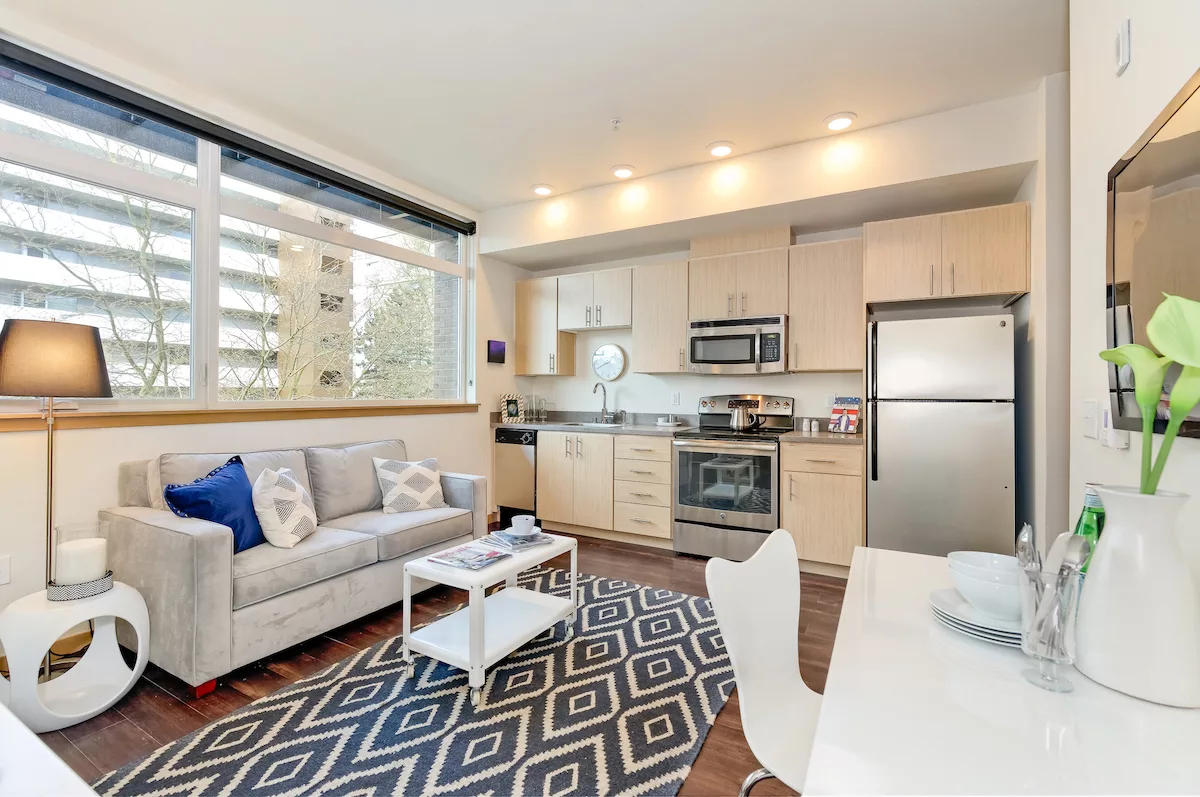
TL;DR: Commuting from Capitol Hill to downtown Seattle usually means a short light rail ride, a RapidRide bus, a 20 to 30 minute walk, or a quick bike or rideshare trip, since the two neighborhoods sit less than two miles apart. The Perch Capitol Hill at 500 Belmont Ave E carries a 96 Walk Score and sits close to the Capitol Hill light rail station, so residents can reach downtown without depending on a car.
- Reach downtown Seattle in a handful of minutes by boarding the light rail at the Capitol Hill station, a short distance from The Perch’s front door on Belmont Ave E.
- Skip the daily parking hassle by using RapidRide, cycle share, or ZipCar instead of driving, all accessible near the building.
- Save money on transportation by walking Pike/Pine and the Broadway corridor instead of paying for downtown parking.
- Compare commute options side by side, from light rail to walking to biking, before deciding how you’ll get to work.
- Schedule a tour of The Perch Capitol Hill to see the studios, one-bedrooms, and loft homes that put this commute within reach.
How the Capitol Hill to Downtown Seattle Commute Actually Works
Commuting from Capitol Hill to downtown Seattle typically takes between 10 and 30 minutes depending on the method, since the neighborhoods are less than two miles apart. Residents at The Perch Capitol Hill, at 500 Belmont Ave E, choose between light rail, RapidRide buses, walking, biking, or an occasional rideshare, and most end up mixing all of them depending on the day.
Why Distance Isn’t the Whole Story
Capitol Hill sits just north and east of downtown Seattle, close enough that the actual mileage is short. What matters more for a daily commute is the terrain and the transit options available at your specific address. Capitol Hill’s western edge slopes down toward downtown, and that grade shapes whether walking feels easy or like a workout depending on which direction you’re headed. The Perch sits on Belmont Ave E, between the Broadway and E Olive Way corridors, which puts it close to several commute paths at once rather than locked into just one. That flexibility matters on days when a bus is running late or the weather turns.
What a Typical Weekday Looks Like
Most residents commuting from this stretch of Capitol Hill pick a primary method and keep one or two backups in their pocket. A light rail rider might walk to the station most mornings, then grab a RapidRide bus home if they’re carrying groceries. Someone who bikes to work might switch to walking on rainy days rather than dealing with wet gear. The Perch’s Walk Score of 96 reflects how much of daily life, including the commute, can happen without a car. That score covers errands and dining as much as it covers getting to a downtown office, which is part of why it matters for renters weighing where to live.
- Flexibility. Multiple transit modes near Belmont Ave E mean no single point of failure.
- Walk Score 96. A near-perfect score means daily errands and short trips rarely require driving.
- Short distance. Downtown Seattle sits under two miles from the building.
A 96 Walk Score and a light rail station within reach mean the commute from Capitol Hill to downtown Seattle can start on foot, not behind a wheel.
Riding the Capitol Hill Light Rail Station
The Capitol Hill light rail station is the fastest way to get from Capitol Hill to downtown Seattle, connecting riders to downtown stations in a short, direct ride. Light rail also answers one of the most common questions renters ask before moving here: yes, you can take the light rail to Capitol Hill, and the station sits close to The Perch’s front door on Belmont Ave E.
What the Ride Feels Like
The Link light rail line runs underground through Capitol Hill before surfacing downtown, so the ride is quick, sheltered from weather, and free of street traffic. For residents heading to offices in the Denny Triangle, South Lake Union, or the central business district, it’s often the least stressful option on the list. Because the station sits within an easy walk of The Perch, there’s no need to drive to a park and ride or catch a connecting bus first. That single-seat ride is a big part of why light rail access shows up so often in conversations about the best neighborhoods for easy access to downtown.
Pairing Light Rail With the Rest of Your Day
Light rail isn’t just for the 9 to 5 commute. Residents use it to reach Sea-Tac Airport, University of Washington, and other stations along the line without ever needing a car parked in the garage. That’s especially useful in a building like The Perch, where parking is controlled access and priced separately from rent. For renters comparing this building against other Capitol Hill apartments Seattle has to offer, proximity to the Capitol Hill light rail station is one of the clearest differentiators worth asking about on a tour.
- Underground platform. Sheltered from rain and street noise during the wait.
- Airport connection. Sea-Tac is reachable on the same line without transfers.
- No park and ride needed. The station is a few blocks from the building.

| Method | Typical Trip Time | Cost Factor | Best For |
|---|---|---|---|
| Light rail (Capitol Hill Station) | Around 5 to 10 minutes to downtown stations | Single fare, no parking cost | Fast, weather-proof daily commutes |
| RapidRide bus | 15 to 25 minutes depending on traffic | Single fare, no parking cost | Direct routes along Pike/Pine and Broadway |
| Walking | 20 to 30 minutes | Free | Nice-weather days and errands along the way |
| Biking or cycle share | 10 to 20 minutes | Low cost, no parking cost | Riders comfortable sharing the road downtown |
| Driving or rideshare | 10 to 20 minutes without traffic, longer at peak times | Gas, rideshare fares, or downtown parking | Occasional trips or late-night returns |
Bus, Bike, and Rideshare Options
RapidRide buses, cycle share, ZipCar, and rideshare all offer additional ways to get from Capitol Hill to downtown Seattle beyond light rail. These options matter most on days when a direct route, a bike ride, or a late return makes more sense than the train.
RapidRide and Local Bus Routes
RapidRide service runs along key corridors near Capitol Hill, giving residents a direct bus option to downtown that doesn’t require walking to the light rail station first. For anyone living on the Summit Ave E side of the building, a bus stop can sometimes be the closer choice depending on the exact destination downtown. Buses also run more frequently at off-peak hours than some might expect, which helps on nights when a shift ends late or a resident is heading home from dinner in Pike/Pine.
Biking, Cycle Share, and ZipCar
Capitol Hill’s cycle share stations and ZipCar availability give residents car-free options for trips that don’t fit neatly into a transit schedule. The Perch includes controlled access bike storage, so residents who own a bike can store it securely and roll straight out onto Belmont Ave E toward downtown. ZipCar covers the occasional need for a car, whether that’s a grocery run or a trip outside the usual transit lines, without the ongoing cost of owning and parking a personal vehicle. Combined with controlled access parking for residents who do keep a car, the building supports a range of commute styles rather than assuming everyone drives.
- Bike storage. Controlled access storage keeps bikes secure between rides.
- Cycle share. Stations near Capitol Hill make short trips downtown easy without owning a bike.
- ZipCar access. Available for occasional trips without a monthly car payment.
When Driving or Rideshare Makes Sense
Some trips still call for a car, particularly late at night or when carrying something bulky. The Perch offers controlled access parking at $250 per month for residents who want that option, separate from the base rent on any floor plan. Rideshare fills the gap for residents who don’t want to keep a car full time but occasionally need a direct downtown trip. Given the short distance between Capitol Hill and downtown, rideshare fares tend to stay modest compared to longer cross-city trips.
Walking the Distance: Is Capitol Hill Far From Downtown
Capitol Hill is not far from downtown Seattle. The walk typically takes 20 to 30 minutes depending on your route and starting point, which is one reason Capitol Hill ranks among the neighborhoods people search for easy access to downtown.
What the Walk Actually Involves
Walking from Capitol Hill toward downtown means heading down the hill, often through the Pike/Pine corridor, with the terrain gradually sloping toward the waterfront and central business district. It’s a manageable walk for most people, and it passes plenty of reasons to stop along the way, from coffee at Analog Coffee on Summit Ave E to a browse through Twice Sold Tales on Harvard Ave. For anyone who wants to build movement into their day without a gym membership, this walk does double duty as both a commute and a bit of exercise. It’s also a good way to learn the neighborhood quickly after moving in, since the route touches several of the streets and corners that define Capitol Hill.
When Walking Beats Transit
On a clear day, walking can be just as fast as waiting for a bus, especially for anyone headed to the northern edge of downtown or South Lake Union. It also skips the fare and the schedule entirely. The tradeoff is weather and effort. Seattle’s rainy stretches make the light rail or a bus more appealing, and the uphill return trip at the end of a long day is a real consideration. Most residents treat walking as one option among several rather than the only plan, which is exactly the kind of flexibility The Perch’s location supports.
- Route variety. Pike/Pine and the Broadway corridor both offer walkable paths downtown.
- Weather dependent. Rain and the uphill return trip make transit more appealing some days.
- Built-in errands. The walk passes shops, cafes, and restaurants worth stopping into.

Life at The Perch Capitol Hill Around the Commute
The Perch Capitol Hill makes commuting easier by placing studios, one-bedrooms, one-bedroom-plus-den homes, and two-level lofts within close reach of transit, without asking residents to give up daily comforts. The building’s location on Belmont Ave E means the commute starts the moment you step outside, not after a drive to a park and ride.
Coming Home to a Building Built for This Life
After a commute, coming home matters. The Perch’s rooftop lounge offers BBQ grills, city views, and an Olympic Mountains backdrop, a spot to unwind after a long day downtown. Exterior decks on most homes extend that same feeling to your own front door, and floor-to-ceiling energy efficient windows bring in natural light while holding temperature better and cutting down on street noise from Belmont Ave E. Homes here range from 436 to 1,071 sq ft, covering everything from compact studios to the building’s single 1,071 sq ft two-level loft, the least common floor plan in the building and the one that tends to go fastest. Whichever size fits your life, the building’s amenities and floor plans are all built around that same idea: make daily life easier, including the trip to and from work.
Sustainability That Shows Up in Daily Living
The Perch is LEED Gold certified with a carbon neutral footprint at construction, a distinction recognized when the building earned Green Builder Media’s Home of the Year award in 2014. That commitment to sustainability isn’t just a certificate on the wall. It shows up in a reverse cycle air-to-water chiller that transfers heat from the parking garage to the hot water supply, Energy Star rated appliances, water saving fixtures, and passive cooling design that means no window AC units cluttering the exterior. For renters who care about sustainability as much as convenience, that combination pairs naturally with a commute that doesn’t require daily driving. Choosing light rail, a bus, or a bike over a car every morning fits the same values that shaped how this building was built.
- LEED Gold certified. Built with a carbon neutral footprint from the start.
- Passive cooling. No window AC units needed thanks to the building’s design.
- Energy Star appliances. Paired with water saving fixtures throughout each home.
Costs, MFTE, and Getting Started
Move-in costs at The Perch include a $60 application fee, a refundable $600 security deposit, and a hold fee that varies with rent, along with a $75 refundable transmitter deposit and $20 refundable fob deposit. Residents are responsible for utilities and required to carry renter’s insurance. Full details on move in costs and fees are worth reviewing before you tour, so there are no surprises. A limited number of MFTE income-restricted homes are also available, offering reduced rent for households that qualify. Up to two weeks free is offered specifically on MFTE units. Eligibility review, income documentation, and annual recertification apply, and applications go through Pronto Housing. If that program fits your situation, you can review the mfte program details before applying. Schedule A Tour to see current availability, check specific floor plans against your budget, and ask about parking, which runs $250 per month with controlled access for added security.
Is Capitol Hill a Good Place to Live for Commuters
Capitol Hill works well for commuters because it combines direct light rail access, multiple bus routes, a walkable street grid, and a short overall distance to downtown Seattle. Renters relocating to or within Seattle consistently rank it among the neighborhoods offering easy access to downtown without requiring a car.
What Makes the Neighborhood Work
Beyond the commute itself, Capitol Hill offers a dense mix of restaurants, coffee shops, parks, and nightlife within a few blocks of Belmont Ave E. Cal Anderson Park and Volunteer Park both give residents green space without leaving the neighborhood, while Broadway Market and the shops along Broadway E cover everyday errands. The density that makes the neighborhood walkable is the same density that supports frequent transit service. That’s not a coincidence. Neighborhoods built around a grid of shops, homes, and transit stops tend to score well for commuters precisely because so much of daily life happens within a few blocks.
What to Weigh Before Moving Here
Capitol Hill is a lively, dense neighborhood, which means street noise and activity are part of the package, especially near Pike/Pine and E Olive Way in the evenings. The Perch addresses some of that directly with energy efficient windows that reduce street noise, but it’s worth knowing what you’re moving into. Renters weighing Capitol Hill against other parts of the city should also compare actual commute times for their specific job location, since a few blocks to a downtown office reads very differently than a commute across the city to South Lake Union or SoDo. Reviewing available apartments and current floor plans is the clearest way to see what fits your commute and your budget.
- Noise consideration. Nightlife corridors like E Olive Way are lively in the evenings.
- Window design. Energy efficient windows at The Perch help buffer street noise.
- Commute specificity. Compare your actual downtown destination, not just neighborhood averages.
Frequently Asked Questions
How can I get from Capitol Hill to downtown Seattle?
The most common ways are light rail from the Capitol Hill station, a RapidRide bus, walking (about 20 to 30 minutes), biking or cycle share, or a short rideshare trip. Most residents near The Perch Capitol Hill mix a couple of these depending on the day and weather.
Is Capitol Hill a good part of Seattle?
Capitol Hill is a dense, walkable neighborhood known for its restaurants, coffee shops, parks, and easy transit access, including direct light rail service to downtown. It regularly ranks among Seattle neighborhoods offering strong access to downtown without a car.
How far is Seattle from Capitol Hill?
Capitol Hill sits less than two miles from downtown Seattle, close enough that walking, biking, transit, or a short rideshare all cover the distance in well under 30 minutes.
Can you take the light rail to Capitol Hill?
Yes. The Capitol Hill light rail station serves the neighborhood directly and connects to downtown Seattle stations in a short ride, with continuing service toward the University of Washington and Sea-Tac Airport.
What is commuting from Capitol Hill to downtown Seattle like by car?
Driving typically takes 10 to 20 minutes without traffic, but downtown parking costs and peak-hour congestion make it less predictable than light rail or a bus. Many residents keep a car for occasional trips rather than the daily commute.
Does The Perch Capitol Hill have parking for residents who drive?
Yes. The Perch offers controlled access parking for $250 per month, giving residents who want a car the option without requiring it for daily use.
How close is The Perch Capitol Hill to the light rail station?
The Perch sits on Belmont Ave E within an easy walk of the Capitol Hill light rail station, and the building carries a 96 Walk Score reflecting how much of daily life, including commuting, can happen on foot or by transit.
Are there income-restricted apartments available at The Perch for commuters on a budget?
Yes. A limited number of MFTE income-restricted homes are available with reduced rent for qualifying households, including up to two weeks free on those units. Eligibility review and annual recertification apply, and applications go through Pronto Housing.
Choosing a Commute That Starts on Belmont Ave E
Commuting from Capitol Hill to downtown Seattle comes down to a short list of solid options: light rail, RapidRide, walking, biking, or an occasional rideshare, all within reach of a neighborhood built for exactly this kind of daily life. The Perch Capitol Hill puts that choice at your doorstep, with a 96 Walk Score, proximity to the Capitol Hill light rail station, controlled access parking for the days you need a car, and a LEED Gold certified, carbon neutral building designed around comfort as much as convenience. From studios starting at 436 sq ft to the building’s single two-level 1,071 sq ft loft, there’s a floor plan here for a range of commute styles and budgets, including MFTE income-restricted homes for qualifying households. If you’re ready to see it for yourself, Schedule A Tour and picture your own commute starting from Belmont Ave E. If MFTE fits your situation, you can also Register Now through Pronto Housing to begin the eligibility process alongside your tour.